
Your Quick-Start Guide to a Medical Device FDA Submission: Why Cybersecurity Comes First
March 13, 2026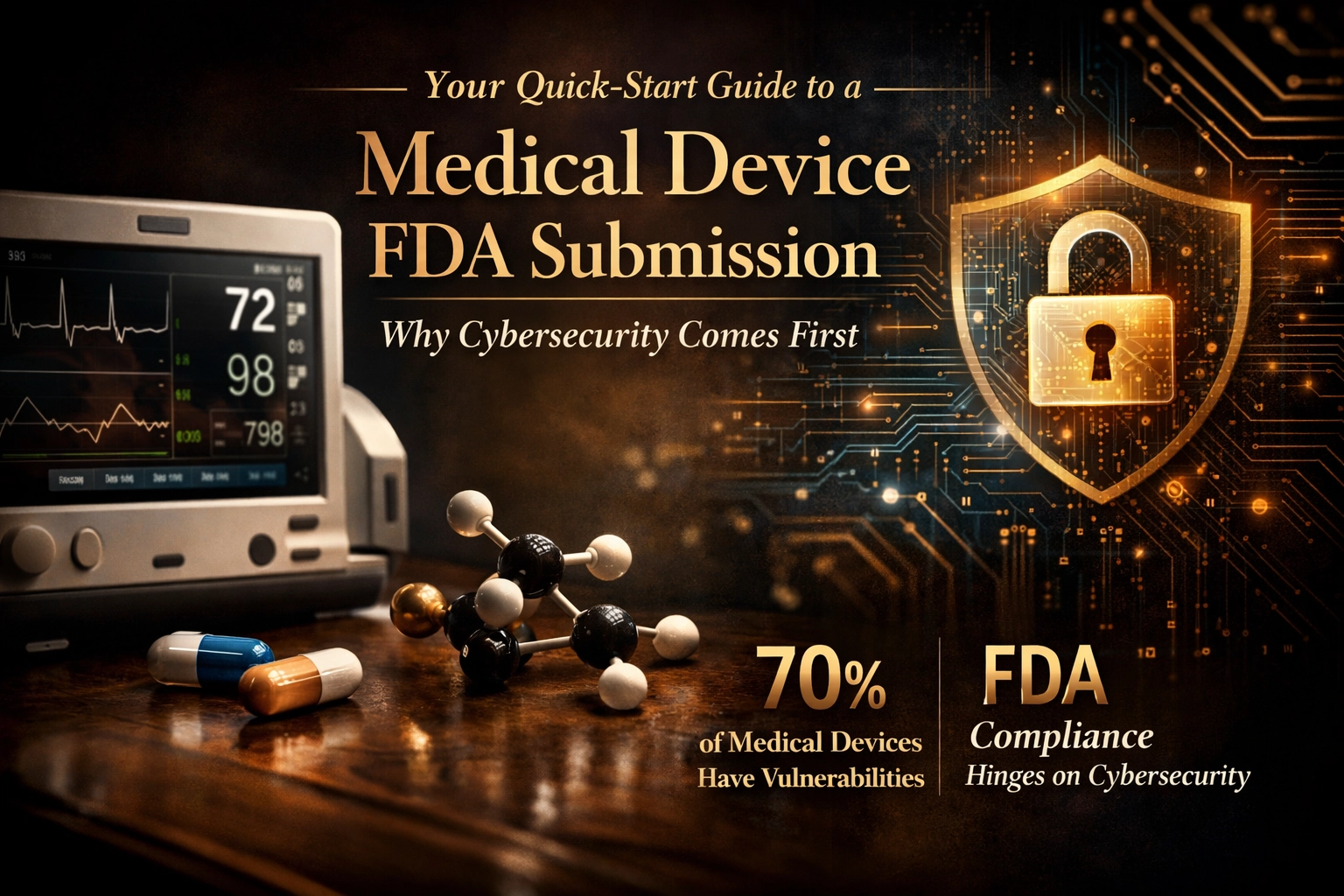
If you’re preparing for a medical device FDA submission in 2026, the landscape has shifted beneath your feet. It wasn’t that long ago that "cybersecurity" was a footnote in a regulatory filing: a box to check once the clinical data was solid. Those days are over. Today, if your device has a heartbeat (digitally speaking), the FDA cares as much about your encryption and patch protocols as they do about your clinical efficacy.
At The FDA Law Solution, we’re seeing a massive trend: the FDA is no longer just asking polite questions about cybersecurity; they’re issuing "Refuse to Accept" (RTA) decisions for companies that treat software security as an afterthought. If you want to get to market without your timeline blowing up, you need to put cybersecurity at the very beginning of your design process.
The New Reality: Why Cybersecurity is a "Day Zero" Requirement
The pivot happened officially back in March 2023, but the ripple effects are still hitting hard today. The FDA now has explicit authority to require cybersecurity information for "cyber devices." This isn't just a suggestion: it’s a statutory requirement.
What does this mean for your medical device FDA submission? It means that if your device connects to the internet, uses Wi-Fi, Bluetooth, or even just contains "programmable logic," you are in the crosshairs. The FDA’s logic is simple: a device that can be hacked is a device that can harm a patient. Whether it's a wearable monitor or a complex surgical robot, the security of the software is now viewed as a primary safety feature.

Is Your Product a "Cyber Device"?
Before you dive into the paperwork, you need to know if you fall under these strict rules. The FDA defines a "cyber device" as one that:
- Contains software validated, installed, or authorized by the sponsor as a device or in a device.
- Has the ability to connect to the internet.
- Contains any such technological characteristics validated, installed, or authorized by the sponsor that could be vulnerable to cybersecurity threats.
Essentially, if it’s more advanced than a tongue depressor and it talks to a smartphone or a hospital network, you’re likely on the hook. This applies across the board: from 510(k)s and De Novo submissions to PMAs and HDEs.
The "Big Five" of Cybersecurity Documentation
When we work with clients on their practice areas, we focus on five core pillars that the FDA expects to see in every submission. If these aren't in your file, don't expect a smooth ride.
1. The Cybersecurity Risk Management Program
You can’t just say, "our device is secure." You have to prove you have a process. The FDA wants to see a formal risk management program aligned with frameworks like NIST 800-30 or ISO 14971. This includes threat modeling, literally mapping out every way a bad actor could try to break into your device: and showing exactly how you’ve mitigated those risks.
2. The Software Bill of Materials (SBOM)
Think of the SBOM as the nutrition label for your software. You need to document every piece of code, including third-party libraries and open-source components. Why? Because if a vulnerability is discovered in a common library six months from now, the FDA (and your customers) need to know if your device is affected. Recent data suggests over half of connected medical devices have unpatched critical vulnerabilities. The SBOM is your first line of defense in managing that risk.

3. A Plan for Updates and Patches
One of the biggest red flags for an FDA reviewer is a device that can’t be updated. You must demonstrate that your device can receive secure, encrypted updates to fix vulnerabilities as they arise. The FDA expects you to provide these patches regularly or immediately depending on the severity of the threat. If your hardware doesn't support remote patching, you better have a very good (and very safe) explanation.
4. Coordinated Vulnerability Disclosure (CVD)
The FDA wants to know that you play well with the security community. You need a formal process that allows researchers and healthcare providers to report bugs to you without fear of legal retaliation. This isn't just about PR; it’s about having a "neighborhood watch" for your device’s security.
5. Post-Market Surveillance
Your job isn't over once the device is cleared. You need a plan to monitor for new threats in the wild. As of February 2, 2026, updated post-market cybersecurity guidance is in full effect, requiring even more robust real-time monitoring. You need to show the FDA that you have the infrastructure to spot a hack before it becomes a headline.
The Strategic Cost of Getting it Wrong
We often see startups and even mid-sized firms try to "bolt on" cybersecurity right before they hit the "submit" button. This is a recipe for disaster.
First, the FDA’s "Refuse to Accept" policy means they won't even look at your clinical data if the cybersecurity section is missing or incomplete. That’s months of delay before you’ve even started the substantive review.
Second, fixing security flaws late in the game is incredibly expensive. If you find a fundamental architecture flaw during the submission phase, you might have to go back to the drawing board on your software design.

How to Prepare for Your Submission
If you are aiming for a successful medical device FDA submission, here is the quick-start checklist we recommend:
- Integrated Design Controls: Build your cybersecurity requirements into your Quality System Regulation (QSR) from day one. Use a Secure Product Development Framework (SPDF).
- Audit Your Third-Party Code: Don't wait until the end to build your SBOM. Know what’s in your stack now.
- Threat Model Early: Run "red team" exercises where you try to hack your own device during the prototype phase.
- Legal Review: Ensure your documentation isn't just technically sound, but legally compliant. The way you phrase your risk assessments can have massive implications for your long-term liability.
Conclusion: Don't Let Code Be Your Bottleneck
The FDA’s focus on cybersecurity isn't a hurdle meant to slow you down; it’s a necessary evolution in patient safety. However, it will slow you down if you aren't prepared. By treating cybersecurity as a core engineering requirement rather than a regulatory checkbox, you protect your company from RTA decisions, your brand from data breaches, and, most importantly, your patients from harm.

If you're feeling overwhelmed by the technical or legal nuances of these new requirements, you don't have to navigate it alone. At The FDA Law Solution, we specialize in helping companies bridge the gap between complex engineering and strict FDA standards. Whether you’re a startup or an established player, getting your cybersecurity strategy right is the fastest way to get your device into the hands of those who need it.
Ready to talk about your submission strategy? Contact us today to ensure your path to market is secure.
Categories: Regulatory Strategy; Compliance Systems
Disclaimer: The information on this blog is for general informational purposes only and does not constitute legal advice. Reading these posts or contacting us through this site does not create an attorney-client relationship. Because FDA regulations and legal standards change quickly, this content may not reflect the most current developments. Always consult with a qualified attorney regarding your specific legal or regulatory situation.