
Speed Matters: Why Your FDA Warning Letter Response Needs Legal Help in the First 10 Days
March 18, 2026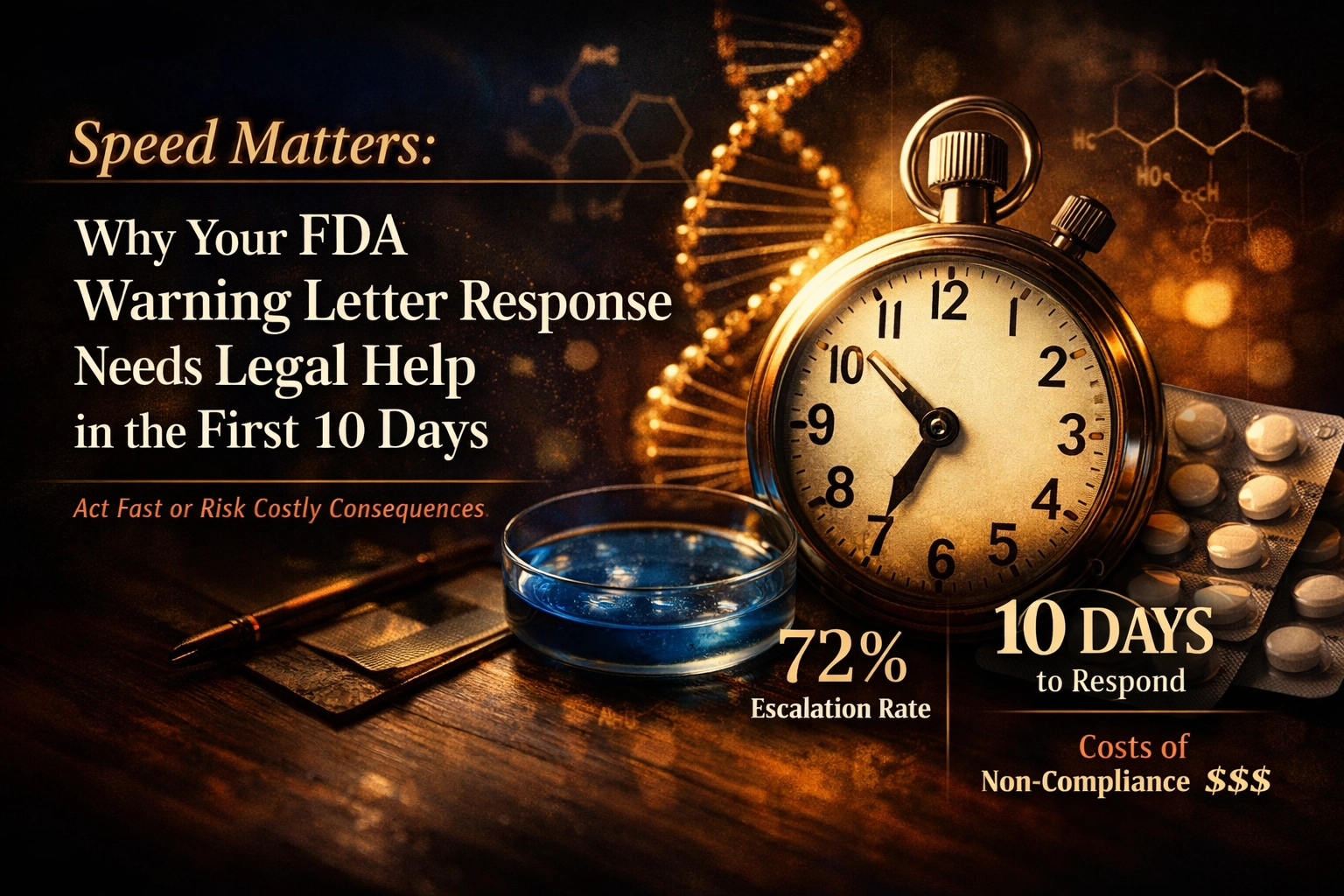
Getting an FDA Warning Letter is one of those "heart-sink" moments for any executive. You’ve put in the work, managed the lab, and navigated the supply chain, only to have a formal letter from the Agency land on your desk: often publicly posted for the world to see.
The clock starts ticking the second that letter is opened. You have exactly 15 business days to respond. While two or three weeks might sound like enough time to write a letter, in the world of FDA Enforcement, it’s a heartbeat. If you aren't seeking fda warning letter response legal help within the first 10 days, you are already behind.
At The FDA Law Solution, we’ve seen how those first 10 days make or break a company’s regulatory standing. Here is why speed is your greatest asset and why legal strategy is the only way to win.
The 15-Day Myth: Why You Actually Only Have 10
The FDA requires a written response within 15 business days. This isn't just a "check-in" or a promise to do better. The Agency expects a detailed, evidence-backed plan that addresses every single violation cited in the letter.
If you wait until day 14 to start typing, you’ve already lost. Here’s the reality:
- Day 1-3: Internal panic and gathering the troops.
- Day 4-7: Root cause analysis and identifying what actually went wrong.
- Day 8-10: Drafting the initial Corrective and Preventive Action (CAPA) plans.
- Day 11-15: Final review, legal vetting, and submission.
If you don't have a legal team involved by day 10, you are likely submitting a response that hasn't been "stress-tested." A rushed response often contains admissions of guilt that can be used against you in future litigation or fails to provide the specific documentation the FDA demands to see.

The Strategic Benefit of Early Legal Intervention
Many CEOs and CCOs think a Warning Letter is a purely technical or scientific problem. It isn't. It is a legal and regulatory enforcement action. While your quality team knows the science, they may not understand the strategic nuances of how the FDA interprets administrative law.
1. Framing the Narrative
When we provide fda warning letter response legal help, our first job is to frame the narrative. We don't just say, "We messed up." We explain the context, highlight the immediate steps taken to protect public health, and demonstrate a culture of compliance.
2. Preventing "Over-Promising"
In a rush to appease the FDA, many companies promise timelines they can't possibly meet. Missing a deadline you set for yourself in a Warning Letter response is a major red flag for the Agency. Legal counsel helps you set realistic, defensible milestones that satisfy the FDA without setting your team up for failure.
3. Protecting the Record
Every word in your response is a matter of public record. If your response is poorly phrased, it can become "Exhibit A" in a class-action lawsuit or a shareholder derivative suit. Legal services ensure that your response addresses the FDA's concerns while minimizing collateral damage to your brand and your legal standing.
 Suggested AI Prompt: A minimalist, sleek corporate strategy diagram showing a 15-day timeline with a highlighted "Strategic Action Zone" in the first 10 days. Clean lines, blue and white color palette, no people.
The Risk of the "DIY" Response
We get it: you have smart people on staff. But your internal team is often too close to the problem. They might be defensive about the processes they built, or they might not realize that a specific "observation" is actually a precursor to a much larger systemic issue the FDA is hunting for.
Without external legal help, companies often fall into these traps:
- Being overly defensive: Arguing with the FDA rarely works. There is a way to disagree with an observation professionally and legally, but it requires a surgeon’s precision.
- Incomplete CAPAs: The FDA wants to see how you will prevent the issue from happening again. Vague promises like "we will retrain staff" are often rejected as inadequate.
- Lack of Evidence: If you say you fixed a piece of equipment, the FDA wants to see the calibration logs and the new SOPs. If these aren't ready by day 15, your response is incomplete.
What Should Happen in Those First 10 Days?
When you bring in The FDA Law Solution early, we hit the ground running. The first 10 days are a sprint to ensure the final 5 days are for polish and precision.
- Immediate Triage: We review the Warning Letter and the original Form 483 observations to see where the gaps are.
- Gap Analysis: We compare your current quality systems (Veeva, MasterControl, etc.) against the FDA’s specific allegations.
- Root Cause Verification: We don't just take the internal team's word for it. We dig into the data to ensure the "fix" actually addresses the root cause.
- Strategic Drafting: We begin drafting the response, focusing on the most high-risk violations first: especially those related to compounding pharmacy safety or medical device integrity.

The Cost of Moving Too Slowly
The FDA isn't kidding when they say "Failure to promptly correct these violations may result in legal action without further notice." If your 15-day response is deemed inadequate, the Agency has a variety of tools at its disposal:
- Seizures: Taking physical control of your inventory.
- Injunctions: A court order that stops you from manufacturing or distributing products.
- Import Alerts: Effectively banning your products from entering the U.S.
- Civil Money Penalties: Massive fines that can cripple a startup or mid-sized firm.
By securing legal help within the first 10 days, you aren't just writing a letter: you are performing a strategic maneuver to keep your business alive.
 Suggested AI Prompt: A sleek, professional image of several pharmaceutical glass vials with clear liquids, arranged in a row on a reflective surface. High-end, laboratory aesthetic, minimalist.
Conclusion: Don't Wait for Day 11
The pressure of an FDA Warning Letter is immense, but it is manageable with the right strategy. The 15-day window is a test of your company’s maturity and its commitment to compliance.
If you try to handle it all internally, you risk missing the "legal forest" for the "technical trees." Speed matters, but strategic speed matters more. Don't let the first 10 days slip away in meetings and internal debates.
If you’ve received a Warning Letter or even a concerning Form 483, now is the time to act. Let’s get your response drafted, vetted, and submitted with the authority that only experienced legal counsel can provide.
Need help with your response? Contact The FDA Law Solution today.
Categories: FDA Enforcement; Regulatory Strategy
Disclaimer: The information on this blog is for general informational purposes only and does not constitute legal advice. Reading these posts or contacting us through this site does not create an attorney-client relationship. Because FDA regulations and legal standards change quickly, this content may not reflect the most current developments. Always consult with a qualified attorney regarding your specific legal or regulatory situation.